Taper Fade vs. Skin Fade — Which One Is Right for You?
The Most Common Question at the Chair
A client sits down. We ask what we're doing today. They say "a fade." We ask how short on the sides. They pause.
This happens every single day. Not because people don't know what they want, but because the word "fade" covers a huge range of styles and the difference between a taper and a skin fade has never been explained clearly. So they guess, or they point at something on their phone, or they say "not too short" and hope for the best.
Here's the actual explanation.
What a Skin Fade Is
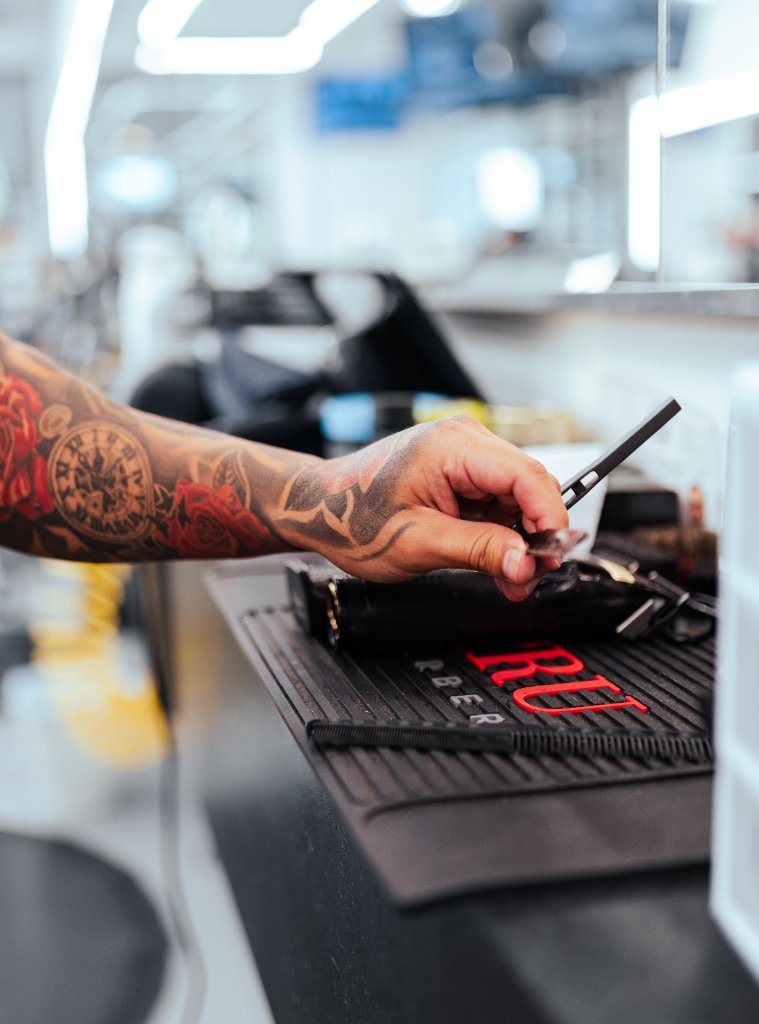
A skin fade goes all the way down to bare skin at the sides and back. The hair gradually transitions from your natural length at the top down to nothing at the bottom. The contrast between the longer hair on top and the bare sides is what gives a skin fade its sharp, high-impact look.
A well-executed skin fade has a smooth, seamless gradient from length to skin. No visible lines. No harsh transitions. The graduation looks almost airbrushed when it's done correctly. That seamlessness is what makes it technically demanding.
Skin fades photograph well, look clean from across a room, and create strong visual structure around the face. They're also the highest-maintenance option — the bare skin starts showing stubble within a week and the blend starts softening around the two-week mark.
What a Taper Fade Is
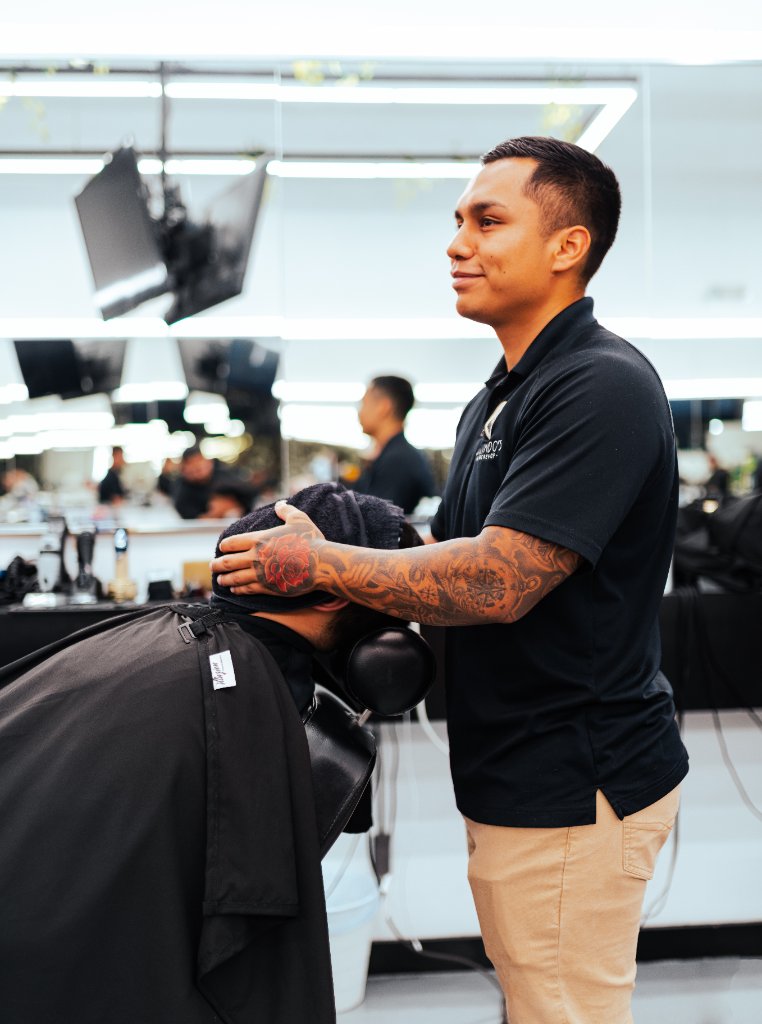
A taper fade blends the hair down to a very short length but does not go to bare skin. The hair at the bottom of the taper is close, but there's still hair there. The transition is gradual and natural rather than stark.
The result is clean and polished without the high contrast of a skin fade. It reads as more classic, more versatile, and more forgiving as it grows out. A taper fade at three weeks looks like someone who's almost due for a cut. A skin fade at three weeks can look like someone who forgot to book two weeks ago.
Which One Is Right for You
Your Workplace and Environment
Skin fades are bold. That's a feature, not a bug, in most settings. But in some corporate or formal environments a skin fade can read as too sharp. A taper gives you the same clean structure with a softer edge that fits more contexts.
Your Face Shape
High-contrast skin fades add visual width at the sides and draw attention to the transition line. This works beautifully on oval faces, heart-shaped faces, and angular jawlines. On very round faces the same contrast can sometimes emphasize roundness rather than balance it. Taper fades are more universally flattering because the gradient is softer.
Your Hair Type
For straight or wavy hair, both fades work well. For curly, coily, or afro-textured hair, skin fades can look incredible but require a barber who specifically understands textured hair. At Galindo's our team cuts all textures regularly and we'll tell you honestly which fade style works best before we start.
How Often You Can Come In
A skin fade needs a visit every 2 to 3 weeks to stay sharp. A taper fade on a 3 to 4 week cycle gives you a consistently clean appearance without the pressure of a tight maintenance window.
The Barber's Honest Recommendation
If you're genuinely undecided, start with the taper. If you love it but want more contrast, your barber can go shorter on your next visit. Going from a taper to a skin fade is simple. Going from a skin fade back to a taper requires waiting for the hair to grow back in first. Always easier to go shorter than to go back.
Book at Galindo's Conroe or Magnolia
Tell us what you're thinking and your barber will recommend the specific fade that works best for your hair type, face shape, and lifestyle.
Galindo's Conroe: 2330 FM 1488 Rd, Suite 700A | (832) 501-3085
Galindo's Magnolia: 9511 FM 1488 Rd, Suite 200 | (346) 209-1666
Ready for Your Best Cut Yet?
Serving Conroe, Magnolia, and The Woodlands area. Book online in under 60 seconds.
Book Your Appointment